Central Ave Locksmith Service Team
Local locksmith team
Jul 3, 2026 12 min read
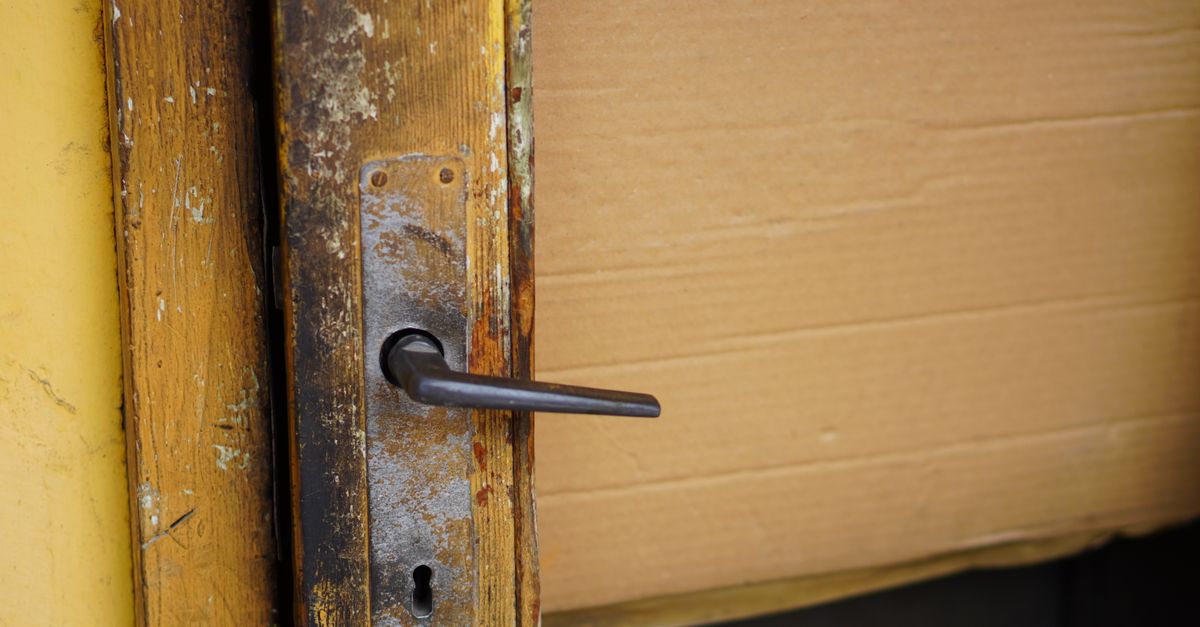
If you own a home on Westfield Avenue, Valley Road, or anywhere in Clark's older residential neighborhoods, there's a good chance the front door has a lock that looks nothing like what you'd find at a big-box hardware store today. Instead of a simple knob or lever with a spring latch, you may have a large, rectangular mechanism recessed deep into the door edge — a mortise lock. These locks were standard in homes built through the mid-20th century, and Clark has plenty of them. Understanding what you have, why it's actually quite good, and what to do when it stops working can save you real money and headaches.
This guide breaks down how a mortise lock differs from a standard door knob lock, why older Clark homes were built with them, what can go wrong over decades of use, and how to decide between repairing the existing hardware or upgrading to something modern. Whether your lock is sticking, the cylinder is worn, or you've just moved into a 1950s Colonial and have no idea what's on your door — read on.
## What Is a Mortise Lock — and Why Does Clark Have So Many?
A mortise lock is a complete locking mechanism housed inside a pocket (the 'mortise') cut into the door itself. Unlike a standard knob lock, which bolts onto the surface of the door, a mortise lock set is self-contained: it typically combines a deadbolt, a spring latch, a strike plate, and a lock cylinder all in one cast-iron or steel body. The result is a lock that is deeply integrated into the door structure rather than simply attached to it. Residential construction in Clark, Union County, and surrounding parts of northern New Jersey boomed from the 1920s through the late 1960s — and during that entire period, mortise locks were the default choice for quality residential construction. Many of those homes still stand today, and their original door hardware is often still in service.
Clark's tree-lined streets like Raritan Road and Central Avenue are lined with brick Colonials, Cape Cods, and split-levels from that era. When a homeowner on one of these blocks calls us about a front door that won't latch properly or a key that suddenly spins without engaging the bolt, the culprit is almost always a mortise lock that has reached the end of a very long service cycle. That's not a failure — a lock that lasted 60 or 70 years is actually a testament to how robust these mechanisms are when properly maintained.
## Mortise Lock vs. Door Knob Lock: The Real Mechanical Differences
A door knob with lock — the cylindrical style most people recognize from interior doors and newer construction — works through a much simpler mechanism. A spring-loaded latch holds the door closed, and a small cylinder in the knob engages a rotating cam to retract that latch when you turn a key. The deadbolt, if there is one, is a completely separate unit installed above or below the knob. By contrast, a mortise lock integrates all of those functions into a single body. This is why a mortise lock set is generally more resistant to physical attack: there's no exposed collar to knock off, the bolt throw is longer, and the housing itself is anchored by the door's own thickness on all sides rather than by just a few screws through a face plate.
This is also why the two types fail differently. A door knob with lock and key typically fails when the spring latch wears out, the key pins in the cylinder corrode, or the knob's plastic cam cracks. These are inexpensive parts to replace. A mortise lock is mechanically more complex — it has a case, a latch bolt, a dead bolt, a spindle, a cam, and a cylinder — so when it fails, the diagnosis matters. Sometimes only the cylinder is worn and a re-key or cylinder swap fixes everything. Other times the case itself is cracked from age, and a full replacement is warranted. Knowing which scenario you're in before you spend money is exactly why calling an experienced locksmith before heading to the hardware store is worth your time.
## When Repair Makes More Sense Than Replacement — Advice for Clark Homeowners
Replacing a mortise lock is not as straightforward as swapping a knob lock. The mortise pocket cut into your door was sized precisely for the original lock's dimensions. Older American-made mortise locks often have case dimensions that don't match modern off-the-shelf replacements — which means either finding a period-correct replacement, having a locksmith machine-fit a modern case, or recutting the door pocket. Any of those options requires skill and the right tools. For homeowners in Clark's historic neighborhoods, this matters: a poorly fitted replacement can damage a solid-wood door that has survived since the Eisenhower administration.
Repair is almost always worth exploring first. A skilled locksmith can often rebuild a mortise lock case, replace a worn cylinder, re-key the lock to new keys, or lubricate and adjust a stiff mechanism — all without touching the door itself. The factors that influence what your service will cost include the specific lock manufacturer and model (some parts are still available; others require custom sourcing), the condition of the case, whether the cylinder alone needs replacement or the full mechanism does, and the time of day you need service. At Central Ave Locksmith, we confirm an exact up-front price before any work begins, so there are no surprises. If you're dealing with a sticking lock, a key that no longer turns cleanly, or a bolt that won't fully extend, call us at 732-209-8357 — we're available 24/7 and can assess the situation on-site before recommending any parts or labor.
## What to Do in a Lockout: Safe Steps Before Calling a Professional
If you're locked out of a Clark home with a mortise lock — or any lock — the first practical steps are always the same: check every other point of entry before assuming the main door is your only option. A back door, a garage entry, or a window you know was unlatched can save you a service call. Check with a trusted neighbor who may have a spare key. Look for a spare you may have left with a family member. If you live in one of Clark's condominium communities near Raritan Road, check with your building manager, who may have access to a master key or a facilities contact.
On the topic of how to pick a door knob lock or bypass a mortise lock: we won't walk through those techniques here, and we'd encourage you to be skeptical of guides online that do. Lock picking and bypass methods in untrained hands cause real damage to both the lock and the door — and on a mortise lock with a 60-year-old case, forcing it the wrong way can crack the housing and turn a repair job into a full replacement. A professional locksmith can open your door non-destructively, verify your ownership of the property, and have you back inside in minutes. What proof do you need for a locksmith? Typically a photo ID showing your name and the address on the door — we're happy to discuss verification requirements when you call.
## The Comprehensive Locksmith Solution: Residential, Automotive, and Commercial Services in Clark, NJ
Central Ave Locksmith serves Clark and the surrounding Union County area around the clock as a fully mobile, insured locksmith team. Our residential locksmith services cover mortise lock repair and replacement, knob lock and lever set installation, deadbolt upgrades, re-keying, master key systems, high-security cylinder installation, lock repairs after break-ins, sliding door lock service, window lock installation, mailbox lock replacement, and smart lock integration for homeowners who want keypad or app-based access alongside their existing hardware. For homeowners upgrading older homes, we regularly work with hardware from brands like Schlage and Kwikset alongside period-appropriate mortise lock replacements.
Our automotive locksmith services include car lockouts, transponder key programming, key fob replacement, ignition repair and replacement, laser-cut key duplication, and broken key extraction from ignitions or door cylinders — covering most domestic and foreign vehicle makes. On the commercial locksmith side, we handle panic bar installation and repair, commercial-grade deadbolt and mortise lock installation, access control entry systems, file cabinet and safe lock service, master key system design for multi-unit properties, storefront lock replacement, and after-hours emergency locksmith response for businesses in Clark and neighboring Westfield, Cranford, and Rahway. Whether a tenant locked themselves out of a rental unit on a Sunday night or a retailer needs a broken lock fixed before Monday morning, our team arrives equipped and ready. The factors that shape a final quote for any commercial job include lock grade, hardware brand, door type, and whether after-hours travel is involved — we walk through all of it before work starts. For any locksmith service need in Clark, call 732-209-8357 — we answer 24/7.
## How Much Does a Locksmith Cost in NJ — and What Determines the Price?
This is one of the most common questions we hear, and the honest answer is: it depends on several specific factors, and anyone who quotes you a firm price before seeing the job should be approached with caution. For mortise lock work specifically, pricing depends on whether the existing case can be repaired or must be replaced, the availability of matching replacement parts, the cylinder type, and the time of day you need service. Emergency locksmith calls outside of standard hours involve travel and immediate response, which is a legitimate cost factor. The same is true for automotive work, where transponder key programming for a newer vehicle requires different equipment and time than cutting a simple mechanical key.
We do not use bargain language or advertise a 'call-out fee' as a teaser only to add charges at the door. Our approach is straightforward: we arrive, assess the situation, and give you an exact quote before touching anything. You decide whether to proceed. That transparency is especially important for Clark homeowners dealing with older mortise hardware, where the scope of work genuinely can't be determined until a trained technician opens the door and looks at the mechanism. If you want a ballpark sense of what's involved before we arrive, call 732-209-8357 and describe what you're seeing — we'll give you an honest assessment over the phone.
## Is Clark, NJ a Good Fit for High-Security Upgrades?
Clark is a residential township in Union County with a mix of long-established homeowners and newer buyers drawn to its school district and commuter access via the Garden State Parkway. Property values here reflect a community that takes home maintenance seriously — and that includes door hardware. Many of the older homes along Raritan Road and in the Valley Road corridor have been well-maintained but still have original 1950s or 1960s mortise locks that have never been re-keyed, meaning multiple generations of keys may exist for the same lock. For new homeowners especially, re-keying should be one of the first things done after closing.
High-security upgrades — replacing a worn mortise cylinder with a restricted keyway cylinder, adding a secondary deadbolt, or integrating a smart lock alongside the mortise hardware — are all practical options for Clark homes. These aren't luxury add-ons; they're sensible maintenance steps for any home where the lock history is unknown. Our team can assess your current setup and recommend the most appropriate upgrade path without pressuring you toward unnecessary work. Whatever direction makes sense for your door, your budget conversation, and your timeline, we'll work through it with you on-site.
Frequently asked questions
What is a mortise lock and how can I tell if my Clark home has one?+
A mortise lock is a locking mechanism that sits inside a pocket cut into the edge of your door rather than being mounted on the door's surface. To identify one, look at the edge of your door when it's open: if you see a large rectangular face plate (usually 7 to 8 inches tall) with both a latch bolt and a dead bolt visible, you have a mortise lock. Homes built in Clark before the 1970s very commonly have them. You may also notice an older-style escutcheon plate on the face of the door with a keyhole below the knob rather than inside it.
Can a locksmith just unlock a door with a mortise lock, or does it always need to be drilled?+
In most cases, a trained locksmith can open a mortise-locked door without drilling. The specific technique depends on the lock's condition and the situation, but drilling is a last resort — not a first step. For lockouts, we verify ownership, assess the lock, and use the least destructive method available. Mortise locks that are well-maintained are actually easier to open non-destructively than many modern high-security cylinders. Drilling is only necessary when the lock mechanism itself is jammed, seized, or damaged to the point where it cannot be operated normally.
What proof do I need for a locksmith to open my door in Clark, NJ?+
Typically, a government-issued photo ID that matches the address on the door is sufficient for a residential lockout. For rental or investment properties, additional documentation such as a lease agreement, utility bill, or property deed may be requested. We ask for verification before any work because it protects you as a property owner as much as it protects us. If you're unsure what to have ready when you call, mention your situation when you reach us at 732-209-8357 and we'll let you know exactly what to bring to the door.
Is it worth repairing an old mortise lock set, or should I just replace the whole door knob lock setup?+
It depends on the condition of the existing case and the door itself. If the mortise lock case is intact and the problem is limited to the cylinder, a worn latch spring, or simple mechanical wear, repair is almost always the more cost-effective and door-preserving option. Switching from a mortise system to a standard knob lock setup on an older door often requires filling and refinishing the mortise pocket, which can compromise the door's integrity and appearance. A professional assessment on-site is the best way to get an honest answer — we'll tell you clearly whether repair makes sense or whether replacement is the better long-term call for your specific door and hardware.